
Company's pay data drives hiring, compensation decisions

ROY HARRYMAN

This article originally appeared in The Kansas City Star.

An Olathe business specializes in providing data crucial to companies’ ability to find and keep talented workers.
 
Compdata Surveys annually publishes the 23-volume “Compensation Data” study, which provides salary, pay practice and benefit information for 539 job titles in 39 states. The company also produces separate, detailed studies on benefits and executive compensation.
 
“Compensation Data,” the top seller, breaks pay information out into metro and rural areas. That way, employers can make local or regional comparisons when setting wages instead of going by a statewide average.
 
Theresa Worman, vice president of business development, said companies primarily use the studies to determine pay rates and pay raise budgets.
 
“Businesses use this to be competitive,” she said. “A lot of times they have to answer the question, ‘How high is up?’ They’ve got to have an idea what the competition is doing.”
 
In addition to salary, today’s employees are also savvy about health and other benefits, Worman said. In the last few years, Compdata has begun providing information on more categories of benefits. It has also added data on recruitment practices.
 
“We have an educated work force,” she said. “Companies have to be quick on their toes to make changes and to make their compensation program a successful part of their business plan and culture.”
 
Compdata’s research is based on survey results from about 5,000 companies. Businesses that want to purchase the study get an incentive to share their pay information with Compdata. Companies that agree to participate in the survey get a discount. Such incentives are necessary to ensure participation in the studies, Worman said. Plus, human resource professionals know they must participate to get good data.
 
“Unfortunately most businesses don’t have a lot of time for the good of mankind,” she said. “Everything about the pricing structure is designed to encourage participation in the survey.”
 
There’s nothing unorthodox about that approach, said Don Linder, compensation practice leader for WorldatWork, a Scottsdale, Ariz.,-based human resources association.
 
“That’s one technique companies use to get participation,” he said. “In order to get good data, there have to be incentives like that.”
 
The survey results are used by companies big and small, Worman said, from Fortune 500 firms to those not large enough to have a human resources department.
 
Compdata’s research differs from salary surveys performed by trade associations, she said. While those studies measure jobs within a specific industry, they generally don’t include pay data on jobs that overlap with other sectors. A bakery may pay accountants well by baking industry standards, but how does its pay compare to other industries? “Compensation Data” answers that question.
 
Worman said that within the past two decades, companies conducted pay surveys amongst themselves. But this trend has faded because cutthroat competition and federal antitrust rulings have combined to push businesses to third-party companies such as Compdata.
 
“Very few if anybody does that anymore, which is very good for these salary houses,” Linder said. “It isn’t worth the risk.”
 
Although not its primary business, Compdata also provides customized surveys for trade groups, such as the Missouri and Kansas Hospital associations.
 
“You’ve got to be very competitive in what I call these very high demand sectors,” said Michael R. Dunaway, senior vice president for field operations for the Kansas City Metropolitan Healthcare Council, a local office of those hospital associations. “Health care is one of those that is really hot right now.
 
“The health care survey provides opportunities for all hospitals to do a couple of benchmarks throughout the year.”
 
In addition to using the industry-specific survey, hospitals use “Compensation Data” to compare wages for jobs in which they compete against other industries. Worman said hospitals in Kansas City and St. Louis face keen competition from casinos for hourly workers in jobs such as maintenance, food service and housekeeping.
 
Suzanne Kimmich, a senior compensation analyst for Tenet Healthcare in St. Louis, said the Compdata health care survey provides information not available elsewhere.
 
“We can run a query and find out what the average rate is for a nurse with seven years of experience,” she said.
 
Dunaway and Kimmich said multiple surveys – not just Compdata resources – are used to try to get the most accurate pay data.
 
“We are always recommending you get two our three sources,” Linder said. “There are literally thousands of different surveys and hundreds of survey providers. Quality is always the issue. You’ve got to be very careful with the quality of the data you are getting.”
 
Linder said companies’ use survey data to put wheels on their compensation strategy. After deciding where they want to land on the pay ladder (for example, the fiftieth percentile), businesses use survey data to affix hard numbers to jobs. A firm may set its salary range lower or higher on the percentage scale, depending on benefits it offers and the expectations it places on employees.
 
“The highest and best use of the data is to set market pricing and to execute a company compensation strategy,” he said. “It’s all about paying what you need to pay.”
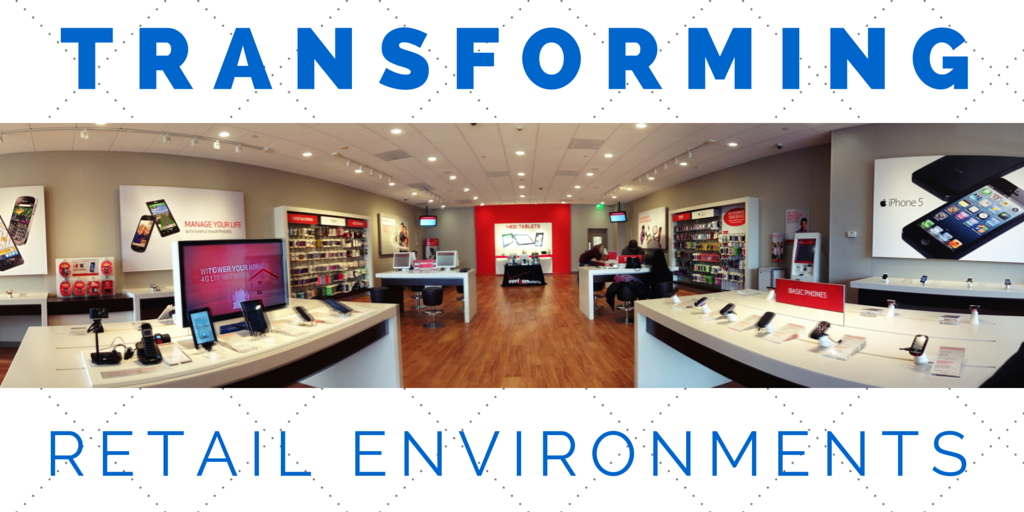
Winntech pushes the boundaries of retail environments

Transforming Retail Environments Roy Harryman

BY ROY HARRYMAN

This article originally appeared in The Kansas City Star.

Talk to Barrett Prelogar for a few minutes and you’ll find he’s fond of this saying: “Throw the rulebook out.”
 
The CEO of Winntech likes to challenge clients’ assumptions about the look and feel of their store or trade show environments.
 
“We’re going to make you completely uncomfortable,” he said. ““Nobody gets to hide behind a tree. At the end we are going to walk out with a giant lightbulb over our heads.”
 
Winntech, a Kansas City-based designer and manufacturer of retail environments, calls this strategy “ideation,” a brainstorming session that can last from hours to days.
 
“The ideation session is designed to move you off your center,” said Prelogar. “We sit down and say, ‘In a perfect world, how would you set your store up for success? Play dream builder.’”
 
However uncomfortable the ideation sessions, they have resulted in new and revamped designs in stores and exhibits around the globe. Winntech has created designs and displays for big name customers including Embarq, Radio Shack, CenturyTel, Time Warner and Sirius Satellite Radio.
 
The company helps clients think through everything from the color of the tile on the floor to the video content featured on touch screens. Then Winntech either builds the components or works with vendors to create and install the concepts.
 
Winntech’s roots are in Prelogar’s college days, when he custom built car stereos. He later opened a store in Manhattan, Kan., that allowed customers to experience how a system would sound in a specific make and model of car. The businesses expanded to building retail audio displays and finally into creating complete store and trade show environments.
 
Winntech encourage store designs that allow customers to use products, not just look at or read about them.
 
When Embarq spun off from Sprint in 2006, the telecommunications company needed a new retail theme and hired Winntech to design its flagship stores. (Embarq has since merged with CenturyTel to become CenturyLink).
 
Prelogar said Embarq had an “uncool” image as a land line company. But the new retail environment helped customers discover that the business was relevant to their communications needs, he said. Winntech’s design received a Chain Store Age Magazine award for Retail Store of the Year in 2007.
 
“You can walk into that store, put your fingers on a screen and start using those services,” Prelogar said. “You could read tri-fold literature until your eyes fell out and not really get it. We want people to put products and services in their hands and tangibly experience them and they are much more likely to buy them.”
 
CenturyLink’s Susan Squires said Embarq was seeking a vendor that would stretch the company and create a unique retail environment.
 
“They were the agency that really made us re-think the way we did things,” said Squires, manager of retail, sales, analytics and planning.
 
Companies often head into a branding-related project with preconceived notions about the outcome.
 
“They’re really good at questioning that strategy,” she said.
 
Winntech asked probing questions, regularly interacted with Embarq and modified the project as they went along.
 
“We kept talking about demographics,” Squires said. “When you’ve got a grandma in North Carolina and a 21-year-old gamer in Las Vegas, how do you get your arms around that?
 
“They really gave us what we felt spanned that diverse mix but we also got a retail environment that was truly outstanding.”
 
Last year, Winntech’s revenues were $12.5 million, the company’s highest total yet. But the firm projects $18 million this year. It employs 75 full-time workers plus seasonal employees in Kansas City and another 15 full-time in the Middle East.
 
In the last few years, the company’s business in that region has taken off, with customers including Saudi Telecom Co., Zain Telecommunications and Zonik, an entertainment and technology retailer.
 
The company also helped design stores for Robot Galaxy, a spin on the Build a Bear concept that’s oriented toward boys. The stores are open in New York and New Jersey. Part of the project was creating the company’s Times Square store inside Toys R Us.
 
“They’re highly creative, extremely energetic, very organized and incredibly professional,” said Ken Pilot, chief executive officer. “That attitude is very, very refreshing.”

Carpe diem in the data center

Seize the Day Roy Harryman

Learn to seize the day and be productive by taking the initiative.

BY ROY HARRYMAN

This article originally appeared at AFCOM.com.

In the movie “Dead Poets Society,” actor Robin Williams implores his boarding school students to “carpe diem” – a Latin phrase meaning seize the day.
 
Seizing the day – whether in life or the data center — is no small task. In operations, an onslaught of interruptions, barrages of e-mail and crisis calls can pour cold water on the best intentions.
 
“We’re always looking for more time,” says Shirley Sunday, a business analyst with Acxiom and president of the Chicago AFCOM chapter.
 
Certainly there are factors on the job that can’t be controlled. But there are many areas of your work that can be managed effectively through personal initiative. As New Year’s resolutions begin to fizzle out, here are some tips to help you excel in the data center in 2006.
 
Recognize the value of your time
 It’s easy to let an hour or even a day slip through you fingers by aimlessly or frantically drifting from one task or meeting to the next. It’s harder to do this when you truly understand Ben Franklin’s saying that “time is money.”
 
What is an hour of your time worth to your company? MindTools, a London based human resources consulting firm, suggests taking your salary and benefits and adding other costs including payroll taxes, office space and equipment. If you speculate a little and add in any profit your job may help the company accumulate, the pot grows larger. Compile the total and then divide by the number of days or hours you typically work in a year. (Three are about 245 work days in a year if you take off four weeks for vacation and holidays.)
 
The point of this exercise is to help you realize that your time is truly valuable and shouldn’t be spent on low-yield activities. Because of the investment in your position, make the most of each moment.
 
Plan proactively every week
It’s easy to tear madly into your workload each Monday. But at week’s end, what have you accomplished?
 
“When you just dive into the pile you don’t get any guidelines,” says Jeff Wolf, president of Wolf Management Consultants, Skokie, Ill. “You are going to continue to be mired in minutia. Without a plan for the day, you can easily get distracted and your plan becomes serving the loudest voice.”
 
Harold Taylor, president of Harold Taylor Time Consultants in Toronto, suggests planning five to seven business days ahead. If you’re only planning for today’s tasks, you’re behind already. However, planning more than 10 days out for routine activities will result in having to change your schedule as new demands are made on it.
 
In addition to weekly planning, Wolf recommends taking a few minutes to determine daily goals.
 
“Too often we walk out of the office feeling confused and saying ‘I really didn’t get anything done today,’” he says. “When you accomplish one or two key items, you leave feeling positive.”
 
Write everything down
This sounds simple enough, yet it is often not practiced. You need a systematic way of recording instructions, appointments, tasks and goals. Don’t rely on your ability to remember things. This doesn’t necessarily require an expensive PDA, although some people may find this works best. A paper planner may do the trick. Taylor, who publishes “Time Management Report” and has invented a planner, recommends using the same planning tool for office and personal life because the two arenas are constantly intermingled.
 
Once a to-do list has been compiled, it must be continually prioritized. Broad goals should be reduced into bite-size chunks so that accomplishing them becomes realistic.
 
Schedule absolutely everything
By themselves, to-do lists can become unwieldy. A key to time management is getting items off of a list and onto your calendar. This applies not only to appointments with people, but to any task that needs time allotted for it.
 
“Those things should be scheduled like appointments with major clients,” says Taylor. “To-do lists are intentions, but scheduled blocks of time are commitments.”
 
Allow more time than needed for projects because of interruptions. Don’t schedule every minute because urgent tasks – downed servers and the like – will pop up to claim your time.
 
AFCOM New York Metro chapter president Dominick Regina says he has found this approach effective.
 
“In an operations environment, you never have time for anything but operations,” says Regina, associate director of infrastructure services for KPMG in Montvale, N.J. “By actually scheduling that time in the calendar, it’s been a good way, 90 percent of the time, to stay on track.”
 
Put limits on responding to e-mail and other messages
The convenience of e-mail and PDAs are offset by their demanding ubiquity.
 
“As much as you love e-mail, it can be rather time consuming,” Sunday says. “It’s a big challenge for everybody when you have 300 e-mails. You try to figure out which ones are important.”
 
Taylor’s suggestion: Schedule a limited amount of time to answer e-mails each day. Don’t go near them unless you have time to fully respond to requests.
 
“Don’t let it control your life,” he says. “Schedule it.”
 
Wolf suggests setting aside two or three 15-minute increments daily to fully concentrate on correspondence.
 
Limit interruptions
In operations, interruptions are a way of life. But some can be minimized by simply closing your door and delegating where possible.
 
Regina says he strives to keep a balance between accessibility and productivity.
 
“When the door is open, people are free to come in and say what they have to say,” he says. “I try to make myself as accessible as possible to a point.”
 
Regina has also found that occasionally working from home or from another office helps him find time to focus. In addition, he’s found that a two-letter word can come in handy in keeping the schedule clear.
 
“It’s hard to say no,” he says. “You want to help people. But I think the right thing to do in many cases is to tell them this is something they should be able to handle themselves. The more you keep your door open, the more of a crutch you become for other people. It’s difficult but is the right thing to do at times.”
 
 Take advantage of energy and creative peaks
 If you’re a morning person, schedule your most challenging tasks then (or afternoons if the converse is true). Don’t give your most productive time away for optional meetings.
 
“When you are at peak time you get peak performance,” Wolf says.
 
Take Baby Steps
If these tasks seem overwhelming, don’t fret. Strive for small improvements. Patience is needed because we are not really mastering time, but ourselves.
 
Some personality types may find time management more challenging than others, but everyone can improve, Taylor says. The important thing is to act.
 
“There will never be more time than there is now,” he says. “The time to start a time management program is now.”

Is your business in the (foreign trade) zone?

Foreign Trade Roy Harryman FTZ

BY ROY HARRYMAN

This article originally appeared in Expansion Management.

VT Halter Marine, like any American company, is searching for ways to remain viable in a fiercely competitive international market.
 
One ace up its sleeve is its location within a Foreign-Trade Zone, which saved the company $150,000 in its last fiscal year.
 
VT Halter, headquartered in Pascagoula, Miss., reports that its Foreign-Trade Zone status gave it a competitive advantage in the construction of two fisheries research vessels and a 579-foot car carrier.
 
“It’s able to compete in an industry that includes a lot of foreign competition,” said consultant Greg Jones, who counts the shipbuilder among his clients. “It’s nice to see companies using their smarts, and it’s great to see government programs that make sense and help them remain competitive.”
 
Foreign-Trade Zones are unique among government incentive programs. They do not reduce property taxes or provide tax credits. Nor do they provide huge cash grants or work force training funds.
 
Instead, companies that receive federal Foreign-Trade Zone Board approval are eligible for import and export tax benefits that help them gain a competitive edge against foreign firms. The program defers, reduces or eliminates U.S. Customs duties on products that are admitted to the trade zone.
 
Each zone is a U.S. location aligned with a customs port of entry where products are considered to be in the stream of international commerce. For the purposes of tariff law and customs duty payments, zones are treated as being outside the customs territory of the United States.
 
“The overriding benefit is that the use of the zones enables U.S.-based companies to lower their costs of production,” said Jones, corporate secretary and senior consultant with Foreign-Trade Zone Corp., in Mobile, Ala. “This enables them to better compete in today’s global economy.
 
“The zones program offers a number of cost-saving strategies that make it economical for a company to conduct value-added activities in the United States rather than outsourcing those activities to offshore locations.”
 
Benefits include:

  • Duty exemption on exports: No duty must be paid on products that are exported after being placed in a zone. If the merchandise is sold in the United States, duty is paid only when it leaves the zone.
  • If materials are manufactured into a product with a lower duty rate than the raw materials, then the lower rate applies when duty is paid.
  • Elimination of duties on most waste and scrap.
  • No duties on rejected or defective products.
  • Deferred duty: Products (including spare parts) can sit in a zone for an unlimited period of time without being charged duty.
  • Elimination of inventory taxes: Foreign products and merchandise awaiting export are free from state and local inventory taxes.
  • Duties are not owed on labor, overhead or profit attributed to zone operations.
  • Duty is waived on sales to the U.S. military or NASA.
  • Simplification and streamlining of import and export processes.

 
There are about 250 Foreign-Trade Zones in all 50 states and the U.S. Commonwealth of Puerto Rico. In addition, there are more than 450 subzones that usually serve the needs of individual companies.
 
According the Foreign-Trade Zones Board, the industry that makes the most prominent use of the zones is petroleum refining. Other significant zone users include the automotive, electronic and pharmaceutical industries.
 
“There are a number of industries that have not discovered the program yet,” Jones said. “Sometimes a tariff problem can exist in an industry for several years before a company makes a move to a zone, then its domestic counterparts often follow suit.”
 
To zone or not to zone?
 Should your business locate in a Foreign-Trade Zone? It depends on your particular importing and exporting requirements. Consultants such as Jones and the staff of some local trade zone offices provide cost-benefit analysis services.
 
Although any company can locate in a zone, businesses must get approval from the U.S. Foreign-Trade Zones Board in order to participate in the program and receive the economic benefits. The board must determine that the decision will result in a net economic benefit to the U.S. economy.
 
Application fees range from $4,000 to $6,500, depending on the number of classes of products that will be assembled and the particular zone status the company is seeking. In addition, local zone administrative offices charge user fees.
 
Jones described the paperwork and application process as manageable in terms of return on investment.
 
“The trouble and cost to meet the requirements are modest compared to the benefits,” he said. “In operational terms, you have to go to a little bit of extra trouble, but not that much.”
 
Subzones are created when general purpose zones can’t meet the needs of a company. An example is the Mercedes-Benz plant between Tuscaloosa and Birmingham, Ala., which needed a greenfield site, not the urban general-purpose zone that was available nearby.
 
“Mercedes-Benz would never consider putting an automotive assembly plant in a downtown area,” Jones said. “If you can’t go to the zone, the zone can come to you. It’s of greater benefit to the U.S. economy for Mercedes-Benz to build vehicles in the United States than in other locations.”
 
Zone locations are diverse
 Properties available in zones are as diverse as the American real estate market itself.
 
With more than 10,000 acres, the Kansas City, Mo., area contains more zone space than any metro area in the nation, with corporate giants such as Sony, General Motors Corp., Ford Motor Co. and Bayer occupying real estate. Some of the zone is in the Hunt Midwest SubTropolis. At five million square feet, it’s the world’s largest underground business complex.
 
Kansas City is seeking to maximize its zone benefits for businesses by establishing a Mexican Customs office in the city. That way, merchandise could be cleared more locally and quickly instead of at the Mexican border. In addition, efforts are underway to develop a multimodal trade corridor connecting the city to Asia by way of a ships-to-rail terminal at the Port of Lazaro Cardenas in Mexico. Combined with recently-reduced Mexican customs fees, this would provide an alternative to California’s congested ports of Long Beach and Los Angeles.
 
Atlanta’s Foreign-Trade Zone will soon have 10 industrial parks within its boundaries. Once additional space is added, the zone will contain 5,000 acres of developed land, including spec buildings and general purpose warehouses. The area ranks fourth in the nation in terms of its logistics employee base.
 
“There are a variety of zone environments,” Jones said. “You have waterfront sites, mature industrial parks and industrial parks under development. The program offers flexibility to companies.”

Straub hammers on through the recession by diversifying

This image is for illustration purposes only and does not represent Straub Construction.

This image is for illustration purposes only and does not represent Straub Construction.

BY ROY HARRYMAN

This article originally appeared in The Kansas City Star.

There’s nothing like a recession to test a business plan.
 
Straub Construction hasn’t been spared the pain of belt tightening, but its longtime strategy of diversification has helped keep the company afloat while others have foundered.
 
Although Straub has prospered during other economic downturns, the current crunch has finally blunted the company’s steady growth curve. In March, the firm laid off about 10 percent of its work force, while the remaining 65 employees took pay cuts.
 
“I’ve never seen anything like it,” said Ernie Straub lll, president of the Shawnee-based general contractor.
 
The company, founded in 1920, saw its revenues grow from $13 million in 1996 to peak at about $78.5 million in 2006. Straub expected 2008 to be its best year ever, but the financial crash left the company at $74.9 million for the year.
 
In addition to cutting its payroll, Straub has responded to the downturn by expanding its geographic reach beyond its traditional 150-mile radius. It’s searching for work throughout Kansas, Missouri, Iowa and Oklahoma.
 
“It’s deadly competition everywhere,” Straub said.
 
The geographic outreach has already paid off, with the company landing two school construction projects in the Wichita area.
 
Straub said the firm’s strategy of managing multiple types of projects is part of the reason for its longevity. In 1988, the company was forced to expand its range when the multifamily market grew sluggish. Today, the firm focuses on multifamily as well as commercial, institutional, religious and historic renovation construction.
 
“We branched out just to survive those times and it turned out to be a really smart move,” he said. “In construction you don’t know what any year is going to bring. If you are going to survive in this business, you’ve got to be able to do a lot of different things. Don’t paint yourself into doing one type of construction.”
 
As part of that philosophy, the firm doesn’t shy from public sector jobs that come with an abundance of regulations. Straub said some construction companies avoid such projects.
 
“It’s because of the bureaucracy and the red tape and the hoops you have to jump through,” he said. “Either you figure out how to do it … or you just don’t play. We’ve been able to figure out how to do the permitting and the regulatory stuff. It doesn’t scare us.”
 
Straub said the company’s ability to navigate the maze of regulations makes it a resource to customers.
 
That was the case when the firm tackled the renovation of the historic Armour Boulevard Apartments in Kansas City, which was completed last year. The project’s tight timeline and the unpredictability of historic structures proved challenging. But the biggest obstacle was complying with several layers of regulations, said Todd Alexander, managing director for acquisitions and development for The Eagle Point Companies, the project’s Portland, Maine-based developer.
 
“It was the mix of four different sets of rules we had to abide by and sometimes those rules just do not marry very well at all,” Alexander said. “Despite the level of complexity, they [Straub] were just fantastic. They finished everything exactly on schedule.”
 
Kansas City University of Medicine and Biosciences has been a Straub customer for about a decade and reports a similarly reliable track record. Straub has constructed an alumni center, a classroom/lab facility and a 1,500-seat auditorium. The company will begin work on a student center and library this fall.
 
“We’ve had an outstanding relationship with them,” said Richard Hoffine, the school’s COO and CFO. “Straub is probably about as responsive as we’ve ever seen as a general contractor … probably far more than most.”
 
Straub has been willing to consider some unconventional approaches to get work. A few customers have asked the company to invest in their projects as a condition of doing business. It’s a term that has been accepted when the request made economic sense.
 
“It’s a sign of the times,” Straub said.
 
The firm has also reshuffled its work force, often using its own staff instead of subcontractors. It has assigned more employees to prospect for business and fewer to work on job sites. Not only does this save money, it helps retain workers.
 
“Things will get better and I want to keep the people here who will be able to respond and hit the ground running,” he said.
 
Straub doesn’t see a recovery on the horizon, but he’s trying to be an optimist.
 
“Half the battle is the psychology of it,” he said. “Construction is on sale. That’s a good reason for everybody to go buy some construction. It’s on sale today and it will be for awhile. If you are going to build something, this is the time to do it.”
 

7 ways to keep business out

Roy Harryman 7 Ways to Keep Business Out

You've heard what to do to attract companies: Here's what'll keep them away.

BY ROY HARRYMAN

 This article originally appeared in Inside Economic Development.

 YOU'VE SAT THROUGH the lectures and taken notes during the seminars. And, if you are desperate enough, maybe even tried to read an academic journal. The focus is always on what to do and how to do it. Marketing, using the Internet, and strategic planning fill lots of time at professional gatherings.

Now here's a list of what not to do. Or, how to scare away potential prospects, shoot yourself in the foot and cut off your nose to spite your face. You will do well to avoid these Seven Habits of Highly Ineffective Economic Developers:
 
1. Betray the confidentiality of the prospect.
If a prospect wants to operate behind the scenes, honor that request. Don't try and make an end run around a consultant or other third-party.
 
"The first way to make sure you blow it is to betray the confidence of the client," says site selection consultant Dennis Donovan, a principal of the Morristown, N.J.,based WadleyDonovan Group. "It's basically automatic elimination. It happens more frequently than I have a comfort level with."
 
Economic developers themselves usually aren't the culprits but the finger ultimately gets pointed at them. "Sooner or later it comes back to the staff of the ED group who did not control access properly," Donovan says.
 
2. Embellish.
We all know figures don't lie. Just make sure you're not one of the liars who figure.
 
"Be straightforward," Donovan says. If you aren't: "You're credibility is shot." If your city is in a remote area, admit it, then point out your pluses. "You can't be saying it's a good school system if your SAT scores are 700," he said.
 
Kate McEnroe, of Kate McEnroe Consulting in Atlanta, calls these embellishments "overly positive in formation. ... If you don't know, say you don't know. Don't make up the answer."
 
One way to steer clear of stretching the truth is to have a focused game plan. Understand that communities can't be all things to all industries.
 
"It's very, very important to understand who you are and who you are trying to become," said John Rhodes, president of Moran, Stahl & Boyer, a business unit of Prudential Real Estate and Relocation Solutions, in Atlanta.
 
Recognize your community's assets, and its weaknesses. You should be able to meet the needs of the industries you target. If you market to plastics firms, then you should have the full menu of business services in place to make them a success.
 
"It means I have the resources to help you do that," Rhodes said.
 
3. Allow delays in the project.
Turn permits around quickly, with 30 days at the long end of the spectrum.
 
"Anything you do to delay the timeline is going to drive people away," McEnroe said.
 
That also means it's important to make sure the sites you have are zoned properly. And when you're planning a permit strategy, don't forget about environmental issues.
 
4. Engage in tribal warfare.
When ED organizations engage in oneupmanship or bickering in front of the prospect, they all lose.
 
"It puts up a big red flag that the community doesn't have its act together and the company is going to get in the midst of acrimonious struggles," said Donovan.
 
5. Offer bare bones business sites.
Don't show prospects an industrial park without utilities.
 
"I just find it preposterous in this day and age," Donovan said. "Septic systems are not viable anymore."
 
And, even though you may have land and basic infrastructure, don't think this alone can meet every industry's needs. Certain sectors may need more. Be aware of their needs before you trumpet your infrastructure.
 
6. Pull the incentive bar too early.
If you throw incentives on the table too early in the process, the prospect may think you've got nothing to offer but a tax break.
 
"Smart buyers ... can see through that quickly," Rhodes said.
 
First, sell the strategic value of your community.
 
7. Engage in taboo behavior.
It's a shame to have to mention it, but all of us know the guy we avoid at the Christmas party. He's loud and hangs out at the punch bowl. That same guy, if he's an economic developer, can blow a deal by getting loaded in front of a prospect.
 
"I've seen that happen a number of times," Donovan says. Other outrageous acts include offering bribes and making inappropriate religious, gender or sexual comments in the presence of a prospect.
 
But not to worry. Even though consultants have run into most, if not all of these blunders, word on the street about the economic development profession is good.
 
"Across the board, in general, we've found the industry to be very professional these days, getting snore sophisticated as we go," said Rhodes.

Packaging firm takes a u-turn toward profitability

This image is for illustrative purposes and does not reflect upon Deluxe Packaging.

This image is for illustrative purposes and does not reflect upon Deluxe Packaging.

BY ROY HARRYMAN

This article originally appeared in VP Magazine.

West Point graduate Jim Burden never envisioned a career beyond the military. But instead of fighting enemy soldiers, he’s spent the last few decades leading the troops in the packaging industry and winning battles on corporate balance sheets.
 
His latest victory has come as director of operations at Deluxe Packages in Yuba City, Calif. In a little over two years he has mopped up the red ink spilling from company ledgers, brought Deluxe back into the black and overseen a $5 million technology upgrade.
 
In military terms, you’d call that a rout. But, as all leaders know, victory requires a team effort.
 
“You can’t do this yourself,” he said.
 
A plan for success
Although he’s decades past his Air Force days, Burden still hears a reveille of sorts at 4:30 a.m. At age 54, he runs every morning and plans to compete in the Boston Marathon.
 
Leading, training, competing: Those verbs characterize the hard-charging yet team-oriented style that has changed the corporate landscape at Deluxe Packages.
 
The privately-held company, founded by Jack Williams, operates plants in Yuba City and Santa Fe Springs, Calif., and employs about 120. The firm specializes in packaging for fresh cut produce, dried fruit and nuts, rice, candy, dairy and bakery products, frozen foods and condiments.
 
Burden joined the company at a critical time: Deluxe had lost some key customers and was not turning a profit. Sales had fallen by about $6 million over a two-year period.
 
In the first 30 days, Burden and the company’s controller worked early mornings and late evenings developing a financial plan.
 
“We had the clock ticking,” Burden said. “It’s not a pleasure when you’re losing money and I take that very personally.”
 
He trained the leadership team in a management and software system called KRA, an acronym for Key Results and Actions developed by Development Dimensions International. Goals were reviewed every 90 days to ensure that they became reality.
 
“This company had never done any firm, long-range planning,” Burden said. “I have been a firm believer in goals, objectives and accountability and I have used them everywhere I have been.”
 
The three-year plan called for targeting new business, reducing inventories, improving manufacturing set-up times and lowering material costs as a percentage of sales.
 
In the first fiscal year after Burden’s arrival, the plan started to yield results.
 
Profitability was restored and revenues reached $25 million. In the next fiscal year, revenues rose to $30 million.
 
The company’s purchasing philosophy has evolved to become congruent with the business plan.
 
“Our goal has been to reduce the number of suppliers we use, to achieve better pricing through higher volumes and to reward the better suppliers,” said Steve Steckbauer, the company’s technical director who oversees purchasing. “Even with this consolidation, we constantly review new suppliers to see if they have products that are unique to the industry and to make sure we have viable back-up suppliers.”
 
There is certainly satisfaction in achievement. But why would Burden take a job riddled with challenges and obstacles in the first place?
 
“I’d done it before,” he said. “When you see that you are able to do that, it builds a certain fire inside you and you have the confidence you can do it and help someone out.”
 
In his first post-military job, Burden moved from the Air Force to Mobile Chemical, where he eventually became a plant manager. While there, he earned his master’s in business administration in the evenings. He also held management roles at what is now called Zimmer Custom-Made Packaging and Scholle Corp.
 
Leading the team
Burden envisions himself as a proverbial football coach. His goal is to empower individual managers to make decisions and to hold them accountable to achieving their goals. He avoids micromanagement and wants employees to develop their own solutions.
 
“It can’t just be Jim’s idea,” he said. “It’s got to be our idea.”
 
Although he has big accomplishments behind him, Burden feels his work is anything but done.
 
Deluxe is constantly evolving and innovating to meet the needs of customers. Growth is anticipated in the company’s package design and graphics departments. The firm is considering further technology improvements to its already renowned printing system. The company succeeds in a global market by offering competitive prices and working constantly to bring them even lower.
 
“We want to try to service the hell out of our customers and provide the best quality they can get anywhere,” Burden said. “I like for everyone to have fun, but but to stay very keen and competitive. We’ve all got a job to do. It’s important to our families, our owners, our customers.
 
“It’s not easy. I keep telling our folks here we’re only scratching the surface.”

Company puts the (solar) power in roofing

Photo is for illustration purposes only and is not representative of Performance Roof Systems.

Photo is for illustration purposes only and is not representative of Performance Roof Systems.

BY ROY HARRYMAN

This article originally appeared in The Kansas City Star.

A Kansas City manufacturer isn’t content to put a roof over your head. It wants you to be able to generate power there, too.
 
“We’re trying to turn it so that space is working for the building owner,” said Travis Wallace, director of marketing and customer support for Performance Roof Systems.
 
In August, the commercial roofing manufacturer installed a roof that is equipped with thin film panels that convert the sun’s rays into power that is used in the plant. On weekends, the electricity generated from the panels is sold back to the grid.
 
But the installation isn’t primarily about generating power. It’s meant to be a demonstration for contractors and customers interested in the firm’s new solar energy roofing system.
 
Although power-generating roofs are uncommon in the Midwest, the company is positioning itself to be at the leading edge as interest grows here and nationwide.
 
“They are one of the leaders, certainly for a company their size,” said Craig Silvertooth, executive director of the Center for Environmental Innovation in Roofing in Washington, D.C. “They were one of the early adopters on a lot of environmental practices.”
 
Silvertooth said power-generating roofs are more common on the east and west coasts. But the recent extension of federal solar power tax credits could help expand their presence.
 
Performance Roof Systems’ parent company has already installed power-generating roof systems in Europe. It recently took a group from the American roofing industry on a tour of facilities in Belgium and France.
 
“You can sense the excitement not only in the (building) owners but also in the contractors,” said Wallace.
 
Chip Manson, president of Western Roof, a commercial roof installer in Kansas City, is eager for the solar roofing market to heat up.
 
“Those (options) allow a contractor to really set himself apart from others,” he said. With the sluggish economy, “everybody’s going to be duking it out for work.”
 
Performance Roof Systems is owned by a Belgian holding company comprised of three families. In Europe, the company and its main product are known as Derbigum. It’s in the process of making its North American name the same.
 
About sixty employees at the Kansas City location work in the company’s 97,400-square-foot manufacturing facility and its North American headquarters.
 
The firm generated revenues of $35 million in 2007, with the parent company’s overall revenues reaching $147 million worldwide. It plans to add 20 employees in America in the next three years, half of those in Kansas City.
 
Although the company’s power-generating roof, called DerbiSolar, is new in America, the business has long emphasized an environmentally friendly approach to manufacturing. Wallace said the company’s vision has been to build sustainable products, systems and relationships.
 
“We’ve just always practiced that,” he said. “For us it’s always been the right thing to do.”
 
Derbigum roofs are made from a proprietary asphalt-polymer blend that is manufactured in sheets. Their smooth surface is reinforced to resist deterioration caused by the elements.
 
“The technique we use in our brand, we have had out in the market in weather conditions for 30 years,” said Wallace.
 
Locally, Derbigum roofs sit on landmarks such as Union Station, The Westin Crown Center, H&R Block’s headquarters and the Midland Theater.
 
The company offers warranties ranging from 15 to 30 years. At the end of a roof’s lifespan, it may be able to be re-covered instead of replaced. Performance Roof Systems offers an option to add a layer over the existing roof. This saves a building owner the expense of re-roofing as well as hauling materials to a landfill. Wallace said this option can extend a roof’s life up to 30 additional years.
 
When Derbigum roofs must be torn off, the company offers to recycle them at its Kansas City facility.
 
Manson said his clients have been eager to take advantage of the re-roofing option.
 
“That has really benefited some of our customers,” he said. “That’s the sustainability of it.”
 
Silvertooth lauded the recycling program, noting that roofing materials constitute 10 percent of landfill debris.
 
“They are one of the leaders in the industry in tackling the problem of recycling,” he said. “Roof systems have historically been one of the big culprits as far as landfills go.”
 
In addition to the re-roofing program, the company offers a white, reflective roofing system that lowers roof temperatures and reduces energy use. It also has a “green” certification program for its installers, vouching that they use environmentally friendly practices throughout their business.
 
“There’s a lot of talk about ‘green’ coming out of the business community these days, but frankly much of it is simply lip service to an identified trend,” Silvertooth said. “Performance (Roof Systems), on the other hand, has backed up its rhetoric with tangible resources.”

Caribbean locations bring offshoring close to home

Caribbean Business Locations Roy Harryman

Manufacturing, telecommunications and international finance all take place within the Eastern time zone.

BY ROY HARRYMAN

This article originally appeared in Expansion Management.
 
Business-friendly locales of the Caribbean prove that offshoring doesn’t have to mean leaving the Western Hemisphere or even the United States.

Several island nations and the U.S. territory of Puerto Rico offer low-tax, low cost alternatives to the distant shores of India, China and the Philippines. In addition to proximity to the U.S. mainland, most are run by stable governments and provide legal protection that is uncertain in other overseas destinations.

Puerto Rico, in particular, is rolling out one blockbuster announcement after another as businesses expand on the island.

In the fiscal year ending June 30, 172 new manufacturing operations opened their doors, resulting in 7,659 new jobs. In addition, Amgen, Eli Lilly and Abbott Laboratories are investing in pharmaceutical manufacturing facilities with a total price tag of about $2 billion.

Amgen alone is planning a $1.2 billion laboratory complex that also includes plants and warehouses.

“As Puerto Rico’s manufacturing evolves, this process development laboratory will help advance the island’s economic activities toward scientific discovery and innovation,” said Madhu Balachandran, Amgen’s vice president for Puerto Rico Operations.

In August, four medical device manufacturing companies announced a combined $30 million expansion that will create 955 jobs. Becton Dickinson, St. Jude Medical, Tyco U.S.S.C. and Ethicon are expanding their operations there.

In addition, Bard Shannon announced in September that it would build a $45 million, 200,000-square-foot plant, resulting in 100 new jobs. 

“Puerto Rico is truly a global manufacturing powerhouse,” said Waldemar Ramirez, Human Resources director for Hewlet-Packard Puerto Rico. The company is considering building a new branch of HP Labs on the island to serve its thriving biotechnology and pharmaceutical industries.

But Puerto Rico isn’t the only bright spot in the region.

Barbados is the most easterly of the Caribbean islands and has become home to the informant technology, financial service and insurance industries.

It’s also experiencing growth in the call center industry. Technion is adding 100 seats to its 150-seat facility, while International Market Access is doubling the size of its 150-seat center. In addition, Zenodata, a U.S.-based data coding and document abstraction company, is adding 100 employees to its current 390.

The multilingual Netherlands Antilles, a group of islands north of Venezuela, is also well equipped for the call center and financial services industries. Its island of Curacao offers 220 acres of fully developed business parks. As part of the Kingdom of the Netherlands, the islands can ship products into the European Union duty-free.
 
Tax advantages
Caribbean nations and Puerto Rico offer low tax environments to expanding companies. Although Puerto Rico is a U.S. territory, federal corporate taxes are not imposed on island operations unless the profits are repatriated. Companies often maximize this tax advantage by reinvesting profits in their Puerto Rican enterprises or in international operations.

Manufacturing wages in Puerto Rico average between 20-30 percent below wages in the mainland United States, while unemployment is in double digits.

Manufacturing and export service companies pay a maximum of 7 percent corporate income tax to the government of Puerto Rico. This amount is reduced to 2 percent if a company is introducing new technologies to the island’s industry base. Tax laws also allow these companies to take advantage of accelerated depreciation of their property.
 
Barbados maintains a low corporate income tax rate of 2.5 percent that can be even lower for information services companies, investment firms and offshore banks. In addition, the nation has negotiated tax treaties with the United States and Canada to prevent double taxation. Corporate taxes are exempted for 15 years for manufacturers that export.

In the Netherlands Antilles, tax incentives are available to manufacturers locating in Industrial Park Brievengat on the island of Curacao. Benefits include: waiver of import duties; a 2 percent corporate income tax rate; real estate taxation exemption; and exemption of employees from personal income tax. Additional incentives reward export-oriented activities in designated economic zones.
 
Stability and proximity
Unlike the unrest that has abounded in parts of Central and South America, much of the Caribbean has experienced peace and stability. The region is easily accessed from the United States and is generally located in the Eastern time zone.

When companies create jobs in Puerto Rico, they are not sending them offshore because Puerto Ricans are U.S. citizens governed by the U.S. Constitution. The same protections that apply to mainland intellectual and real property are in place there.

The stability of Puerto Rico is continuing to draw new industries, including the island’s first aerospace engineering center. While Puerto Rico’s population is about 3.8 million, there is also a large Puerto Rican population on the U.S. mainland that may be willing to return home for the right job.

Pharmaceutical and medical equipment manufacturing companies have been operating in Puerto Rico for five decades. HP has been in production there for 30 years, with operations including manufacturing, sales and research.

“HP has over 1,800 employees and has never had any difficulties in hiring highly educated personnel,” said Ramirez.

The island offers a bilingual work force, with Spanish and English widely spoken. It is a launching pad for marketing to the Caribbean, Central and South American markets. This is evidenced by HP’s recent decision to move a key marketing office from Houston to Puerto Rico. The new office manages sales and marketing in Central America, the Caribbean and Ecuador as well as Puerto Rico.

“The dual cultural component of Latin American background and its close political and economic relationship with the U.S. makes Puerto Rico the perfect link for both the Anglo and Latin regional markets,” said Ramirez.

Other Caribbean locations also offer stability, direct and frequent air connections to the United States and familiar language and culture.

Barbados was governed by the United Kingdom until 1966. As a result, English is the dominant language. A flight from New York takes less than five hours. Daily freight and passenger flights reach the United States and Europe.

The Netherlands Antilles is served by major airlines. Workers speak the native language Papiamento, but English, Dutch and Spanish are also widely spoken. The islands are also strategically positioned for international businesses with their European connection and location between North and South America.

Builder's product is peace of mind

Charter Builders, Roy Harryman, VP Magazine

By ROY HARRYMAN

This article originally appeared in VP Magazine.

Some people might see mud and construction debris, but Charles DeVoe III saw his destiny.
 
Standing in the middle of a casino construction site circa 1979, the college intern witnessed how indispensable site supervisors are to a project’s overall success. The experience convinced him to change his major to prepare for a career in construction management.
 
“I saw how important it was that I was there to help them make decisions to see something grow from a piece of ground to a building,” he said. “That was my calling. It was what I wanted to do.”
 
That passion for construction leadership has landed DeVoe at the head of Charter Builders, one of central Texas’ leading commercial contractors, with $170 million in revenues in its 2004 fiscal year.
 
Headquartered in Dallas, the firm’s 110 employees serve government, educational and corporate clients in about a 100-mile radius. Projects include sports complexes, religious institutions, warehouse and industrial facilities as well as school, retail and medical buildings. Educational facilities are its niche.
 
The company, consistently ranked in the top 300 contractors nationwide, was founded in 1971 and was acquired by John Mowlem & Co. in 1988.
 
DeVoe joined Charter as project manager on a $50 million prison for the state of Texas. He was promoted to vice president of operations in 1995. In that position, he oversaw all construction operations and employee hiring until January of 2004 when he was named president. During his tenure in operations, the company’s sales volume grew from $50 million to $150 million and its employee count leaped from 40 to 100.
 
Although he is excited about buildings, DeVoe knows that what his firm sells is peace of mind.
 
“What we sell is a service and we compete among many others service providers, so you have to sell the advantage of your firm,” he said.
 
For Charter, that edge is the premium it places on its relationships with customers, employees and subcontractors.
 
Maximizing relationships
 Charter’s strength is maximizing the relational element of the business. Exhibit A is school construction.
 
“Education has more demands than just building the project,” DeVoe said.
 
Successful contractors should attend school board meetings, even when they won’t be asked to speak. They should get to know board members and even help with school fund-raising initiatives. They should also attend PTA meetings and take the initiative to alert neighbors of pending construction traffic.
 
“The fact that we do it and take the time to do it gives them confidence in us,” DeVoe said. “There’s a lot of service to the client over and above building facilities. All of those things help separate a good contractor from a really good contractor.”
 
The company also places a high value on its relationships with employees.
 
“I give them a doorway to come and see me,” he said. “For me, it’s providing them with a comfort that if you have an issue, let’s talk about it and see if we can work through it. Employee retention is strong here.”
 
More than half of Charter’s employees have worked there for more than five years and 25 percent have more than 10 years with the company. Turnover is below 5 percent anually.
 
In addition to Charter’s employees, subcontractors play a key role in the firm’s success. Solid subcontractor relationships are achieved through responsiveness and fairness, said Bruce Helm, the executive vice president who oversees purchasing.
 
“I find that the subs will respond positively if they know they are going to get a fair opportunity,” said Helm. “You can’t develop trust overnight and you can lose it in one job or decision. We work very hard to treat the subs fairly and with respect on every project.“This philosophy carries on into the field with the operations team. Charter is known for being tough but fair. We pay on time and push the schedule to help all the subs complete their work in a timely manner.”
 
Expansion plans
The construction industry is notorious for its cyclical, boom and bust nature. Charter, however, has a project backlog of nearly two years.
 
“Keeping a good backlog is a real challenge because it keeps everybody with the firm feeling good about the future,” DeVoe said. “It keeps people knowing that, when it finishes in June, we’ve already got another one for you.”
 
Charter is researching how it can effectively serve other markets in order to maintain its steady workflow. It’s working to expand beyond its primary niche of elementary and secondary school construction.
 
The company has spent six months investigating the health care, higher education, retail and government sectors for possible long-term and repeat business opportunities.
 
“When the education sector might slow down, you have some experience that will help you in other markets,” he said. “Higher education is a likely additional sector for us and a good complement.”
 
With plans being formulated for the future, DeVoe has his employees at the forefront of his mind.
 
“The future is for them,” he said. “My time here is limited. I’ve got an obligation to give it to them as good or better than it was given to me.”