
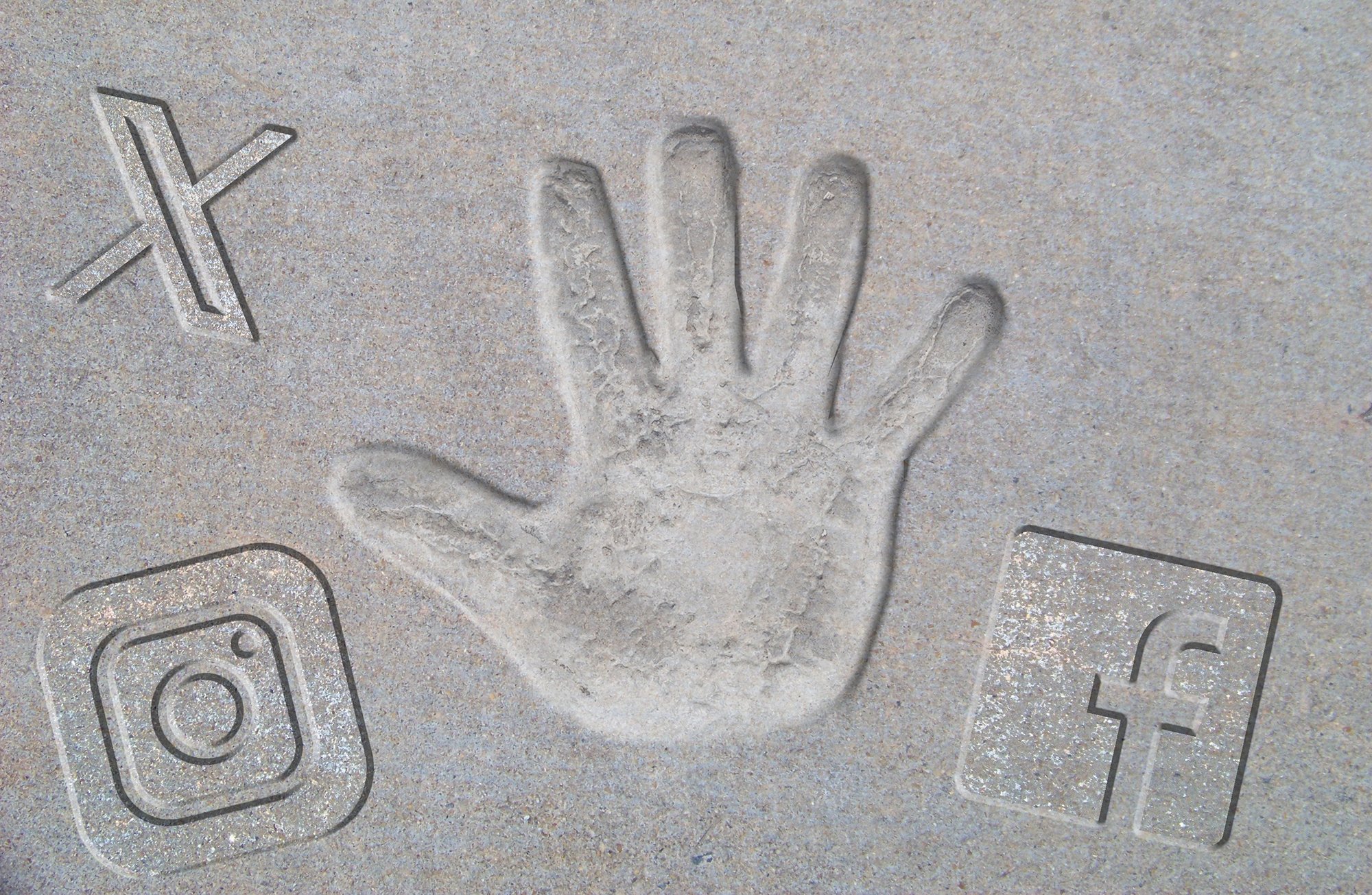
Invest most fully in marketing tools that can’t be taken from you.
By Roy Harryman
Social media is omnipresent, with Facebook, Instagram, TikTok and more pushing hard to get your ad dollars. They promise a great deal. And sometimes they come through.
But often what they deliver is pure chaos. Social Media Examiner is a well-established media brand and had approximately 400,000 followers on its Facebook page (more than half a million now). One day it woke up to find its page was gone – just vanished.
On a much smaller scale, a colleague saw his Facebook business page (with 3,000 hard-won fans) also vanish. Twice!
Neither of these events were suspensions or penalties: Their pages just went away with no explanation and no apology. In addition to those random disappearing acts, numerous small businesses have been banned from their own accounts with no explanation except that they somehow “violated community standards.” But no one will tell you did wrong or when you did it. Could it be a mistake by the social media company? You’ll never know.
Hackers from Hades
It’s also fairly easy for your account to be hacked. In situations like these, there is often no one to call. You can only “chat” with bots that have preprogrammed responses and often lead you in circular reasoning. For example, Facebook and Instagram tutorials on reclaiming a hacked account tell you to hit the “re-send your password” button. But if a hacker has changed your account’s email address, you can’t get the re-set code. It’s an infuriating dead end.
Or you could go on TV three times and make an appeal. Yes, I said that! Another colleague of mine had her Facebook and Instagram business accounts hijacked by someone claiming to be a jihadist. My friend was no slacker on security and had used two-factor authentication to secure her account. Yet it failed.
The hacker was a pro (if you can say that) and harassed and stalked my colleague for months, demanding ransom.
But the great thing about Facebook and Instagram was that they did … absolutely nothing.
The business owner was trapped in a bot dead-end. The only thing that remedied the situation was TV media. She did not one, but three news interviews about her plight before someone at Facebook saw a report and told someone else about the issue. Then it was fixed instantaneously.
Instagram is legendary for security vulnerabilities. In fact, people sometimes hire hackers to hack the hackers and get their accounts back.
Moving the goalposts
Beyond this are the challenges of social media algorithms and constantly changing rules. How often should you post? Well, that depends. Posting too often can result in the social platform suppressing your reach. Post too infrequently and you risk falling out of sight. And the rules depend on the platform.
Even if you pay for social media advertising, you’ll find the restrictions and categories governing your ads are forever in flux. Your strategy from three months ago may go up in flames when the platform updates its policies.
I could go on, but I think you get the idea. Social media is rented land. You can’t control it. It’s there one day and may be gone the next. No matter how good of a steward you are, the landlord can show up unannounced and kick you to the curb.
Finding a focus
So what should we do? Give up on social media? No. Just don’t put all your eggs in one basket. For starters, have a presence on more than one platform. Then if Facebook erases you, you can still post content on X or LinkedIn.
“The greater lesson is to invest most fully in media platforms you can own and manage.”
The greater lesson is to invest most fully in media platforms you can own and manage. A website is the most concrete example of this. The storms of social media will rage, but your website can continue to steadily post content, expand its offerings and engage with customers and prospects.
Another “owned” tool is your customer/prospect list. If you diligently and ethically build a permission-based database, you can reach the people who matter most to your business via text, email and postal mail.
Email marketing is part rent, part owned. The email list is yours. But email marketing has its own rules. If you generally follow them, you’ll be in good standing. But buying and using rogue lists can cause you to be officially designated as a spammer. When that happens, you can’t even send an email to the colleague at your next desk. It’ll go straight to spam. Don’t do it.
Other owned marketing tools include any physical assets, whether they be a sign, storefront or vehicle wrap. Make the most of them. Facebook can’t take them away.
Home ownership used to be a nearly universal aspiration of Americans. Today, renting and apartment living have surged in popularity. That’s all good and fine.
But when it comes to your marketing machinery, renting isn’t hip. In fact, if it’s your only hangout, you may end up on the streets waving a sandwich board.

Roy Harryman is the author of “Small Business, Big Impact: A No-Nonsense Marketing Strategy For Companies That Do More With Less.” This column is an excerpt from the book.