
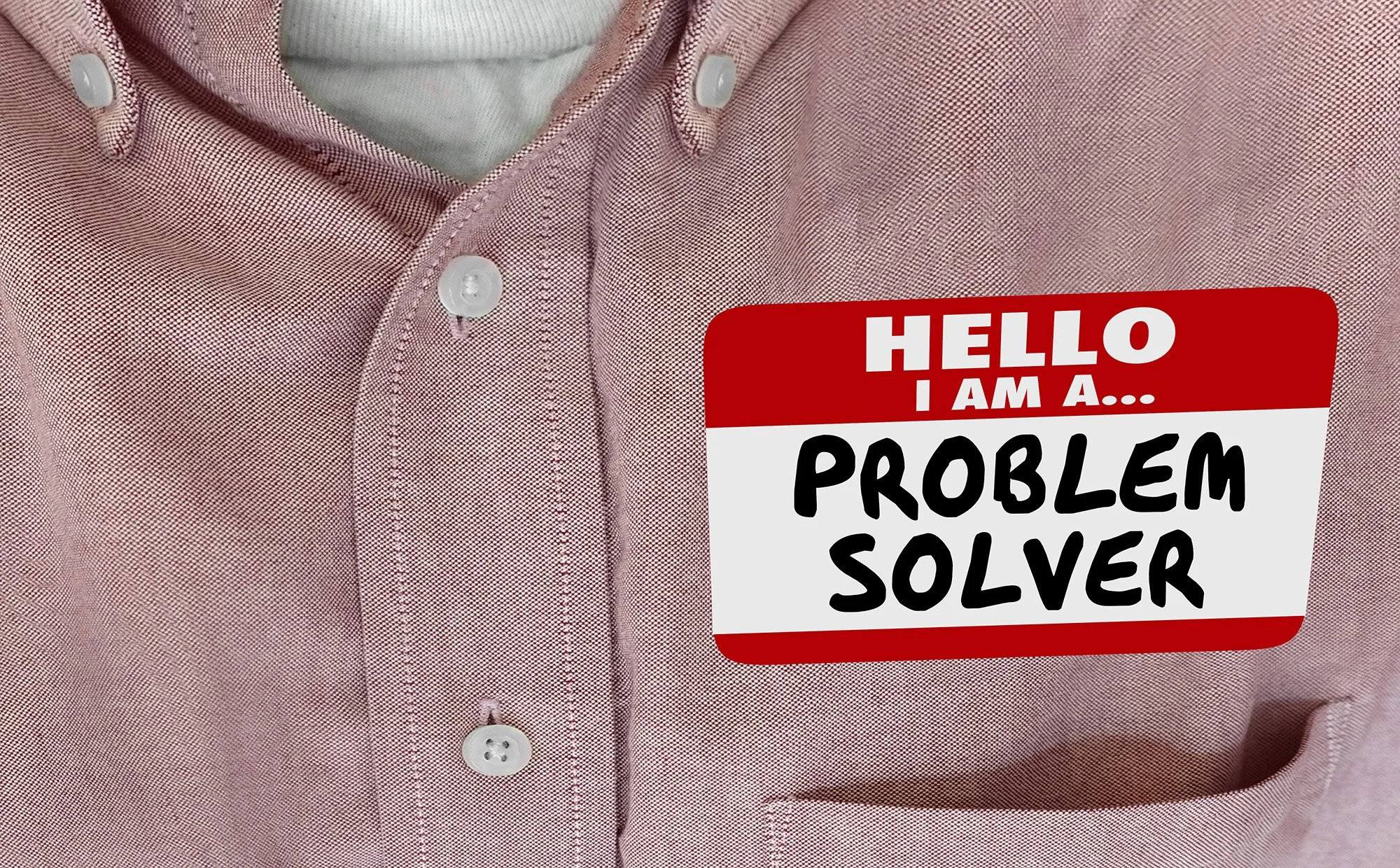
Customers don’t care about our products and services. They want to know how we can make their lives better.
By Roy Harryman
This will seem counterintuitive to many small-business people. But the best way to promote your products and services – especially to those who don’t know you – is not to promote your products and services.
What?
The average American sees (at least!) 16,000 logos, advertisements and brand labels every day. Can you win in that game?
Second, put yourself in the shoes of the prospect. Do you like getting direct mail solicitations? YouTube ads? TV commercials? Social media ads? Unless we’re talking about watching Super Bowl commercials (and even they’re a mixed bag), your answer is almost certainly “no.”
Third, simply pushing your stuff comes across as self-serving. Think about it: You’re giving nothing anything away. You’re asking someone to do you a favor by giving you their money. Now, there’s nothing wrong with that. But as a marketing tactic, it’s often ineffective. This approach fosters a transaction, not a relationship.
So, what do you do?
I’ve written about the importance of storifying. That’s a great place to start. But beyond that, we must resolve to educate, inform and enlighten our customers and prospects. And – if you’re really good at it – you can also entertain (but you really have to be good at it).
Marketing guru David Meerman Scott popularized this concept: “Educate and inform instead of interrupt and sell.”

You’re an educator
Let’s begin with educating. I’m not asking you to be a teacher. I’m asking you to share your expertise. Your business is your area of authority, whether it’s construction, automotive, dry cleaning or mixing cocktails. In your subject matter, you’re an expert who is bringing value to people’s lives.
Let’s take the example of a personal nutritionist. He could begin by sharing a little of his expertise each week. Yes, he is giving something away. But he’s not giving it all away. The nutritionist is sharing just enough to show that (1) he has a benevolent spirit, (2) he is an authority, and (3) he’s likable (because he does #1 and #2).
This nutritionist is solving problems for people who want to take better care of themselves.
What does it look like to educate and inform? For the nutritionist, it could resemble the following:
A blog post about easy ways to get more fiber in your diet
A social media post about the three healthiest foods you can eat
A holiday-themed post about how to enjoy the season without blowing up your health and fitness
There is wide latitude in the way these concepts are communicated. But sharing them brings value to customers and prospects and creates goodwill toward your business.
Note that none of these posts “rob” the nutritionist of the opportunity to deliver personalized counsel or sell products to clients. But freely sharing information of value gets him on their radar screen.
You may think your industry or business can’t yield information like this. But it certainly can. Sometimes it takes an outsider’s perspective to blow away the dust and find the gold hidden underneath.
A little creative thinking can unearth ideas to help you educate and inform prospects and clients. If you are a real estate agent, the percentage of the populace immediately ready to buy or sell a home is small. But there is a large percentage that will be ready at some point. If you take the time to help them now, you can be top of mind later and may be referred today. How can an agent connect with people who aren’t ready to buy or sell? By solving problems they have right now. The field of real estate is a goldmine of “how to’s” about maintaining and improving property. An agent can also become a go-to point of reference for people seeking specialists such as plumbers, electricians and painters. Agents who take this approach are not only experts in real estate transactions, they’re champions of homeowners everywhere. Would you call someone like that when it’s time to buy or sell?
Putting it into practice
To make this real, pull out a pad of paper or a note-taking app on your phone and brainstorm the answers to these questions:
How does your business make life better for people?
What problems does your business solve for people?
How does your business or nonprofit change the world? Or even a little corner of it?
What are some stories that can illustrate your answers to the above points?
Coming up empty? Sometimes you’re too close to the story to see it. In that case, an outside marketer may help you see the value in what you take for granted.
“This approach can help us reframe our way of thinking and communicating about what we do. Instead of, ‘I sell stuff,’ our new paradigm can be ‘I solve problems’ or ‘I make your life better.’”
This is not to say you should never engage in direct selling. But in my observation, small businesses focus too heavily on this in their marketing. A good rule of thumb is a ratio of 1:9. That is, do one “sell” post for every nine educational posts. In this way, you earn the right to give a sales pitch. Then when you give it, it’s more likely to be received. However, it’s not that you haven’t been selling in the other nine pitches. It’s just that your method has been implicit instead of direct. You have, in fact, been selling the whole time. The only difference is that in the tenth pitch, you switch to direct sales.
Let me entertain you
Finally, a word on entertaining. I’m not speaking of singing or playing guitar in a commercial. I’m speaking of the value of injecting humor and creativity into your marketing. This is often attempted and often botched. And you certainly can’t please everyone. But well-executed humor, like a good story, sticks in our brains. This is why court jesters, actors and comedians have been prized through history.

“[There are] comics, intellectuals, creators and heroes,” wrote historian Paul Johnson. “I reckon the comics are the most valuable. … Those who can dry our tears and force reluctant smiles to trembling lips are more precious to us, truth be told, than all the statesmen and generals and brainy people, even the great artists. For they ease the agony of life a little and make us even imagine the possibility of being happy.”
An excellent place to start is self-deprecating humor. In other words, make fun of yourself.
Will it work? Sometimes. There are no guarantees. But some of the most memorable ad campaigns of all time have made people laugh. Humor does not have to be over-the-top, pie-in-the-face comedy. It can be subtle. Even the tone matters. If you can liven up a serious topic with a little levity, you’ve won.
Caveat: There are some topics that don’t mix with humor. That’s OK. Leave them alone.
If humor isn’t your strength, then skip this one. Take your pick: educate, inform, enlighten or entertain.
The goal is to bring value to your customer. Do it and win.

Roy Harryman is the author of “Small Business, Big Impact: A No-Nonsense Marketing Strategy For Companies That Do More With Less.” This column is an excerpt from the book.